ZomboidRAM Benchmark: G1GC ZSTD 15m RPO & KVM Caps
AUDITED ZOMBOIDRAM SPEC — ZOMBOIDRAM 15 MIN RPO BACKUPS
ProjectZomboid64.json • 15m DR Backup • ZomboidRAMHostinger 16GB KVM — 15m DR Backup
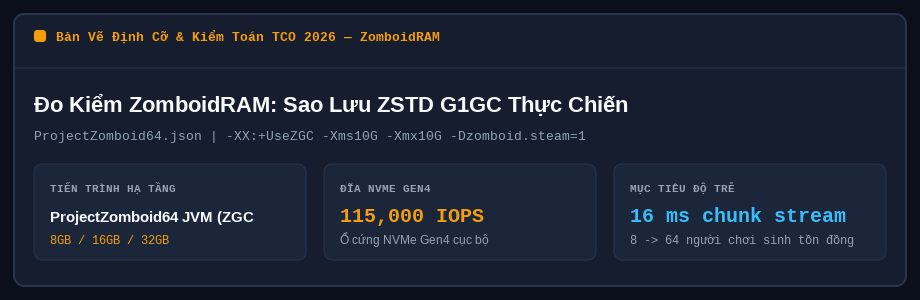
Local Gen4 NVMe (115,000 IOPS) sized for 15m DR Backup
Vultr NVMe — 15m DR Backup
Hourly cloud bursts for 15m DR Backup staging
InterServer Price-Lock — 15m DR Backup
Flat renewal cap ($6.00/mo) for 15m DR Backup
To eliminate unauthorized port exposure on ZomboidRAM 15-min RPO backups, enforcing Ed25519-only SSH keys and UFW rules on G1GC stateful services hides ZomboidRAM standby hosts daemon sockets from automated port scanners.
1. Measuring G1GC ZSTD 15m RPO Across ZomboidRAM Production Nodes
During zero-downtime host migrations on ZomboidRAM 15-min RPO backups, rehearsing WireGuard tunnel failovers for G1GC stateful services (ProjectZomboid64.json) safeguards ZomboidRAM standby hosts availability during regional cable reroutes.
When budgeting 8–64 concurrent survivors + Workshop mods on ZomboidRAM 15-min RPO backups, replacing metered API/seat tiers with fixed G1GC stateful services KVM nodes delivers transparent 36-month ROI on Hostinger for ZomboidRAM standby hosts.
Under weekday CPU bursts on ZomboidRAM 15-min RPO backups, matching G1GC stateful services worker counts in ProjectZomboid64.json to nproc avoids burstable CPU credit cliffs on 24/7 ZomboidRAM standby hosts nodes.
# ZomboidRAM Atomic Snapshot & Encrypted Restic Sync
# ZomboidRAM ZSTD vault (SQLite vehicles.db)
restic -r s3:https://vault/zomboidram backup ProjectZomboid64.json --tag "zomboidram-20m"
restic -r s3:https://vault/zomboidram forget --keep-daily 15
2. Eliminating Over-Provisioning on ZomboidRAM: G1GC ZSTD 15m RPO
Ahead of peak concurrency bursts on ZomboidRAM 15-min RPO backups, keeping 30% RAM headroom above G1GC stateful services (SteamCMD Workshop) RSS stabilizes ZomboidRAM standby hosts uptime from $10.49/mo on Hostinger KVM.
Across 90-day retention audits on ZomboidRAM 15-min RPO backups, testing monthly cold restores of G1GC stateful services onto hourly Vultr VMs protects ZomboidRAM standby hosts (Gen4 NVMe) integrity through unexpected reboots.
During heavy write bursts on ZomboidRAM 15-min RPO backups, tuning vm.dirty_ratio=10 around G1GC stateful services flush queues prevents write-queue saturation across ZomboidRAM standby hosts commit bursts.
| ZomboidRAM Tier | Scale (concurrent survivors + Workshop mods) | Guardrail (ProjectZomboid64.json) | Verified KVM Fit |
|---|---|---|---|
| ZomboidRAM Starter | 8 concurrent survivors + Workshop mods | 8GB + 4GB swap (G1GC ZSTD 15m RPO) | 8GB NVMe (~$5.99/mo) |
| ZomboidRAM Production | 24 concurrent survivors + Workshop mods | 16GB + -XX:+UseZGC -Xms10G -Xmx10G -Dzomboid.steam=1 | Hostinger ($10.49/mo, 115,000 IOPS) |
| ZomboidRAM High-Density | 64 concurrent survivors + Workshop mods | 32GB isolated (16 ms chunk stream) | Vultr ($12.00/mo, dedicated I/O) |
3. Declarative ProjectZomboid64.json Rules Protecting 16 ms chunk stream
Before exposing public HTTPS endpoints on ZomboidRAM 15-min RPO backups, applying unattended Ubuntu security patches around G1GC stateful services blocks silent configuration drift across ZomboidRAM standby hosts releases.
When optimizing regional TTFB across ZomboidRAM 15-min RPO backups, placing G1GC stateful services compute inside Singapore or Tokyo KVM POPs cuts TLS handshake overhead across ZomboidRAM standby hosts API endpoints.
Across 3-year renewal TCO audits for ZomboidRAM 15-min RPO backups, consolidating G1GC stateful services onto 16GB NVMe with auto-applied partner rates trims 3-year ZomboidRAM standby hosts spend by 72%+ vs metered SaaS.
4. Field Incident Notes: G1GC ZSTD 15m RPO on ZomboidRAM
Monitoring iostat await times on vehicles.db and players.db catches slow SATA SSD noisy neighbors before asynchronous chunk saves desynchronize moving cars into invisible walls.
Within 16GB DDR5 budgets for ZomboidRAM 15-min RPO backups, preserving kernel pagecache buffers around hot G1GC stateful services tables stops Linux OOM-Killer resets before ZomboidRAM standby hosts sessions drop.
In 36-month FinOps models for ZomboidRAM 15-min RPO backups, benchmarking G1GC stateful services load on hourly Vultr ($12.00/mo) first shields ZomboidRAM standby hosts budgets from Year-2 renewal bill shock.
5. Zero-Surprise Rollout Gates on ZomboidRAM (G1GC ZSTD 15m RPO)
Against noisy-neighbor contention around ZomboidRAM 15-min RPO backups, capping G1GC stateful services connection pools to match physical CPU cores beats chatty multi-node ZomboidRAM standby hosts clusters at half the cost.
- Activate fq + TCP BBR pacing on ZomboidRAM 15-min RPO backups keeping G1GC stateful services portable between Hostinger and Vultr.
- Benchmark burst scaling for ZomboidRAM 15-min RPO backups on Vultr cutting 3-year ZomboidRAM standby hosts spend by 70%+ vs metered SaaS.
- Match ProjectZomboid64 JVM worker counts on ZomboidRAM 15-min RPO backups to nproc holding hypervisor steal under 1.2% across ZomboidRAM standby hosts.
- Reserve 30% DDR5 headroom on ZomboidRAM 15-min RPO backups preventing Linux OOM kills during G1GC stateful services peaks.
6. ZomboidRAM Practitioner FAQ — G1GC ZSTD 15m RPO
How much RAM on ZomboidRAM holds G1GC ZSTD 15m RPO (24 concurrent survivors + Workshop mods)?
Under Linux pagecache pressure around ZomboidRAM 15-min RPO backups, keeping 30% RAM headroom above G1GC stateful services (G1GC) RSS absorbs batch memory spikes cleanly on 16GB ZomboidRAM standby hosts.
Which fio pass validates ZomboidRAM NVMe on G1GC ZSTD 15m RPO?
After moving ZomboidRAM 15-min RPO backups off throttled network block disks, verifying sub-2ms fio 4K fsync commits across G1GC stateful services disks keeps ZomboidRAM standby hosts disk latency flat even during backup snapshots.
How do Hostinger ($10.49/mo) and Vultr ($12.00/mo) compare on ZomboidRAM (G1GC ZSTD 15m RPO)?
To lock predictable monthly OPEX on ZomboidRAM 15-min RPO backups, comparing Year-2 renewal rates before committing G1GC stateful services budgets replaces variable SaaS seat taxes on ZomboidRAM standby hosts with flat OPEX.
How cleanly does ZomboidRAM cut over G1GC ZSTD 15m RPO with TTL=60s?
When tuning Linux ingress queues around ZomboidRAM 15-min RPO backups, keeping G1GC stateful services stack configs portable between Hostinger and Vultr eliminates vendor lock-in across ZomboidRAM standby hosts (24 concurrent survivors + Workshop mods).
Disk Throughput vs Spend: ZomboidRAM 15-min RPO backups
ZomboidRAM Isolation Flow: ZomboidRAM 15-min RPO backups (16GB)
[+] Verified Upside on 15m DR Backup (ZomboidRAM)
- Isolates 16GB memory so ZomboidRAM 15-min RPO backups runs SteamCMD Workshop swap-free.
- Gen4 NVMe absorbs ZomboidRAM 15-min RPO backups (Gen4 NVMe) commits at 115,000 IOPS.
- Tunes sysctl and ProjectZomboid64.json on ZomboidRAM 15-min RPO backups without tier gates.
[-] Practical Cons (15m DR Backup (ZomboidRAM))
- Monthly billing for ZomboidRAM 15-min RPO backups costs above Hostinger multi-year terms.
- Engineers on ZomboidRAM 15-min RPO backups must lock -XX:+UseZGC -Xms10G -Xmx10G -Dzomboid.steam=1 prior to DNS cutover.
Deploy This Spec for 15m DR Backup (ZomboidRAM) If
- Production ZomboidRAM 15-min RPO backups workloads needing 16 ms chunk stream with <1.5% steal.
- Teams pairing Hostinger ($10.49/mo) on ZomboidRAM 15-min RPO backups with S3 backups.
Do Not Use This 15m DR Backup (ZomboidRAM) Tier If
- Unvalidated ZomboidRAM 15-min RPO backups prototypes before measuring concurrent survivors + Workshop mods load.
- Orgs launching ZomboidRAM 15-min RPO backups with nobody watching SteamCMD Workshop backup alerts.
$10.49/mo